


PRESCHOOL
The YIES Nursery School is a bilingual programme, designed for children aged 3 to 6.
Book a visitEvery child takes centre stage
We draw inspiration from the Reggio Emilia Approach, which is recognised worldwide for its focus on children’s modes of expression.
We have combined this foundation with our expertise in Outdoor Education and emotional and social development.
For us, putting children at the heart of everything we do means enabling each child to realise their potential within a welcoming community.
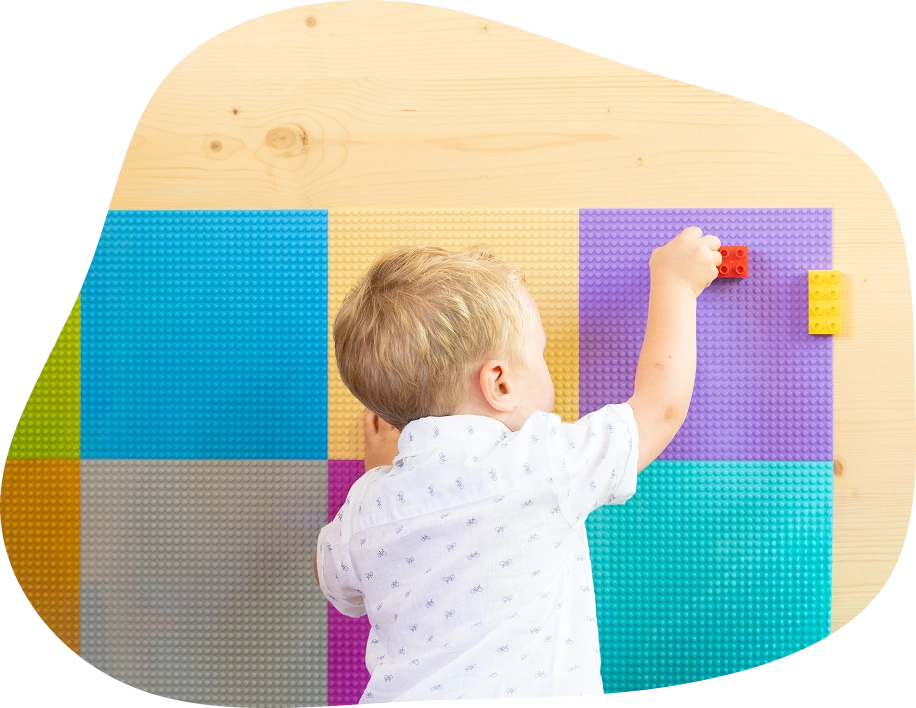
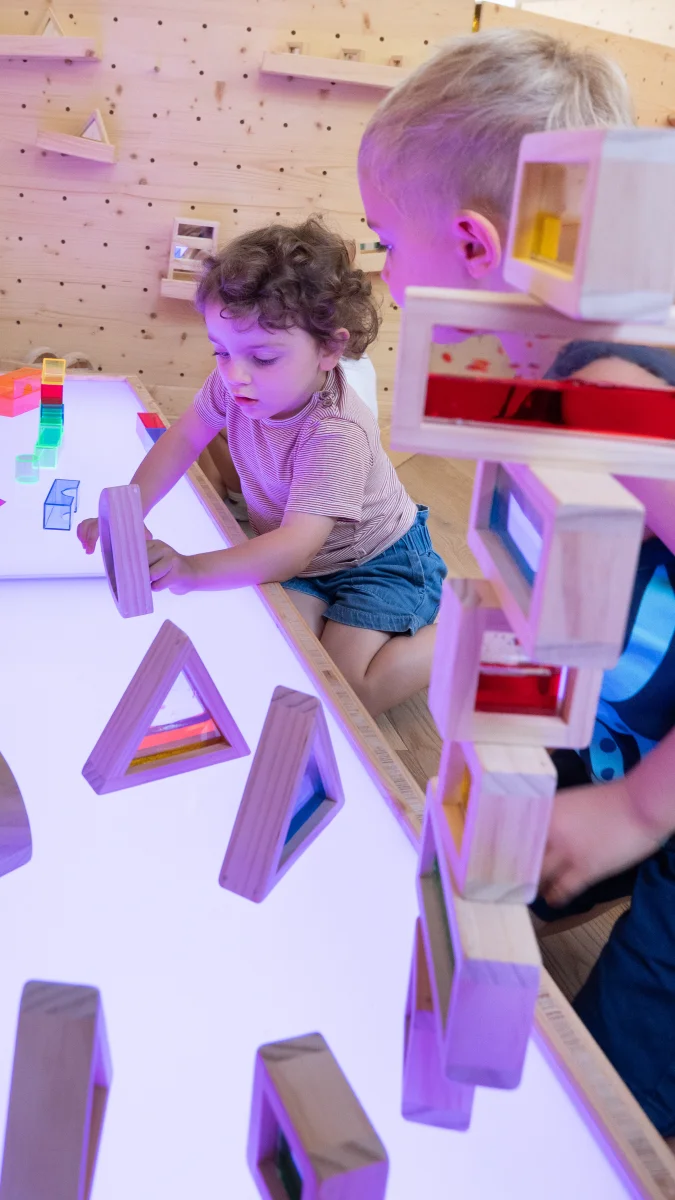
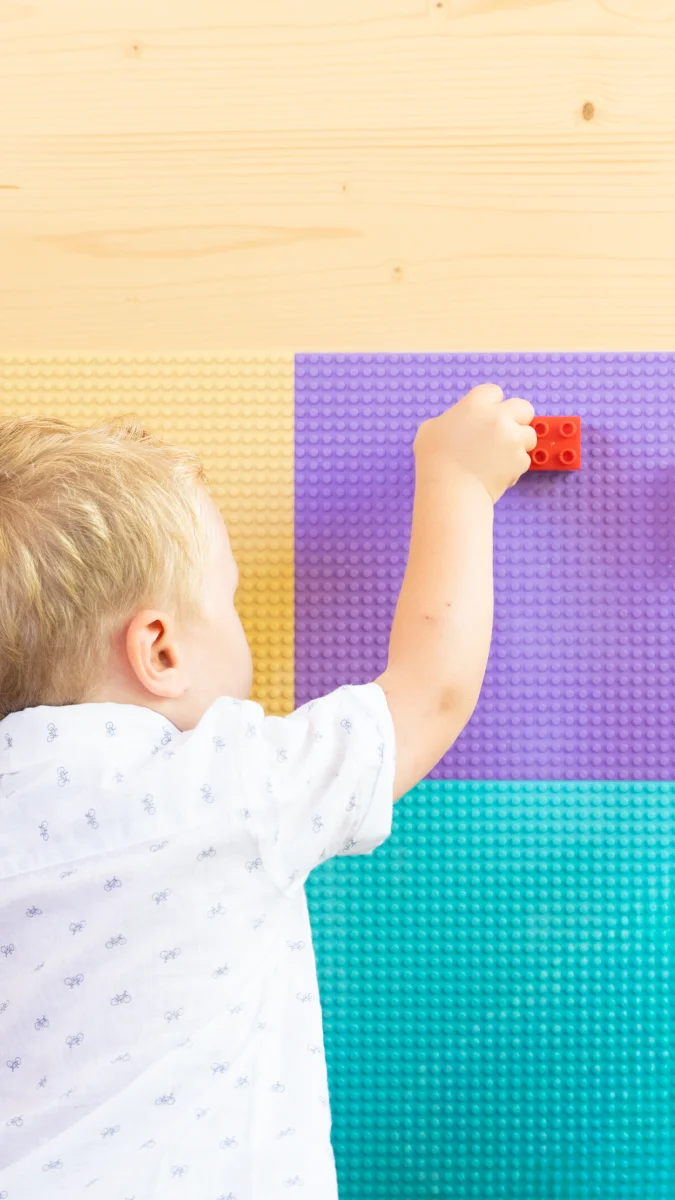
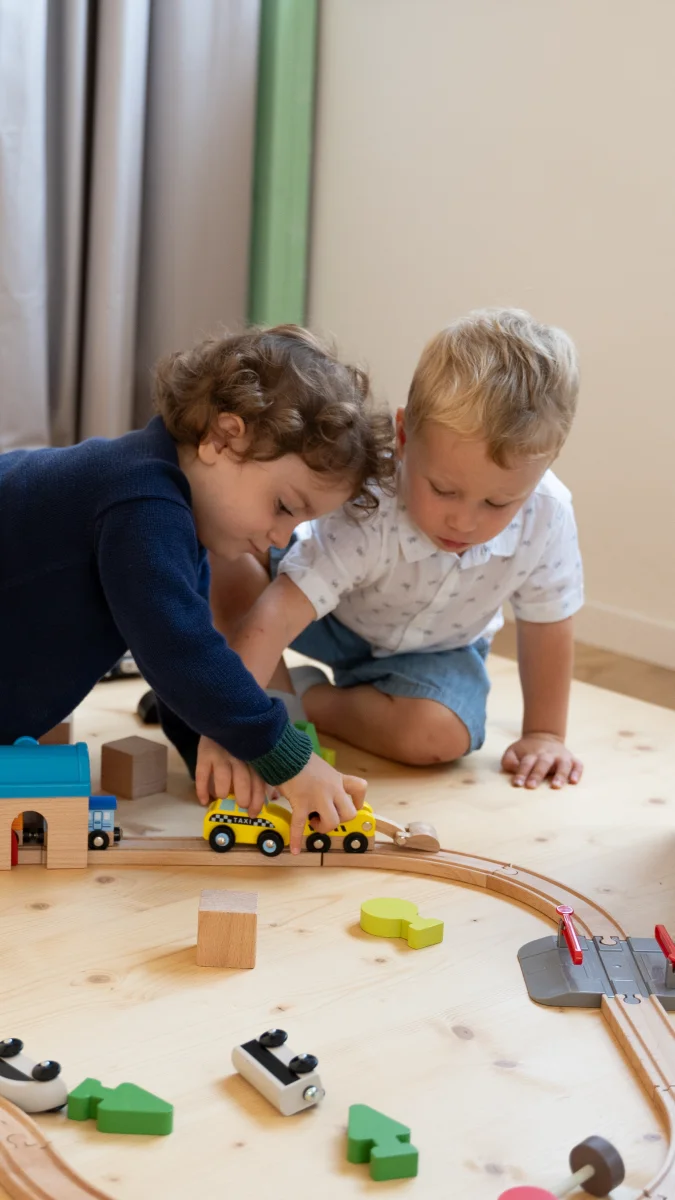
Let’s start with a simple principle: every child brings with them a sense of uniqueness and individuality that enriches the group. They are free to explore, ask questions and experiment, using a variety of tools: picture books, building materials, creative workshops and spaces for movement.
Our programme supports every child in achieving the objectives set out in the National Guidelines for the Lower Secondary Curriculum, using both Italian and English.
How we work
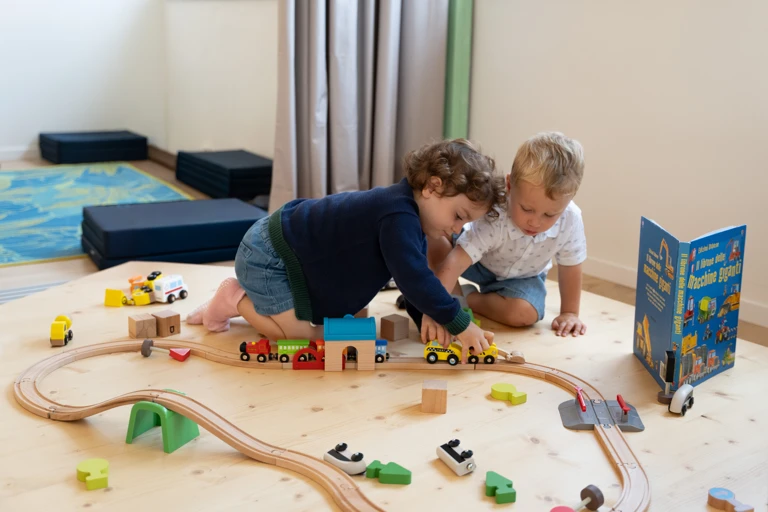
We devote time and attention to observation: their behaviour, interests, the way they play and interact.
We reflect on what we observe and design everyday experiences based on these reflections.
- Games, routines and activities that promote independence, growth and self-awareness
- Active teaching methods that encourage exploration and creativity
- A STEAM approach to stimulate curiosity and a spirit of inquiry
- Relationships as the foundation of all learning
- Visual documentation to illustrate growth
The vertical sections
The preschool is organised into mixed-age groups: 3-, 4- and 5-year-olds together.
The older children support the younger ones, creating an environment that encourages learning and cooperation.

Italian-English bilingualism

 50%
50%
Il metodo 50/50, one teacher one language
At our school, English is an integral part of the children’s development, with a balanced mix of languages: 50% Italian and 50% English. English is woven into everyday life in a dynamic, creative and playful way. Each teacher speaks in their own language, so the children learn naturally, without becoming confused.
English for communication: to engage in social interaction and learning in a natural and spontaneous way.
Whether at school, in the park, at the market, in a museum, on public transport, or on a school trip, we provide constant exposure to the English language, enhanced and enriched by a variety of different contexts.
- English teachers are always on hand
- Metodo one teacher one language
- Daily exposure
- Natural, experiential understanding
- Use of reading aloud, with an extensive bilingual library
Outdoor Education: learning in nature
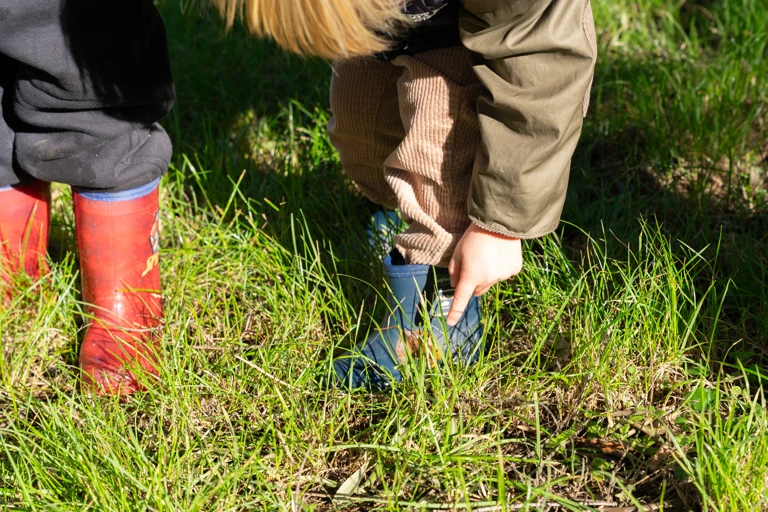
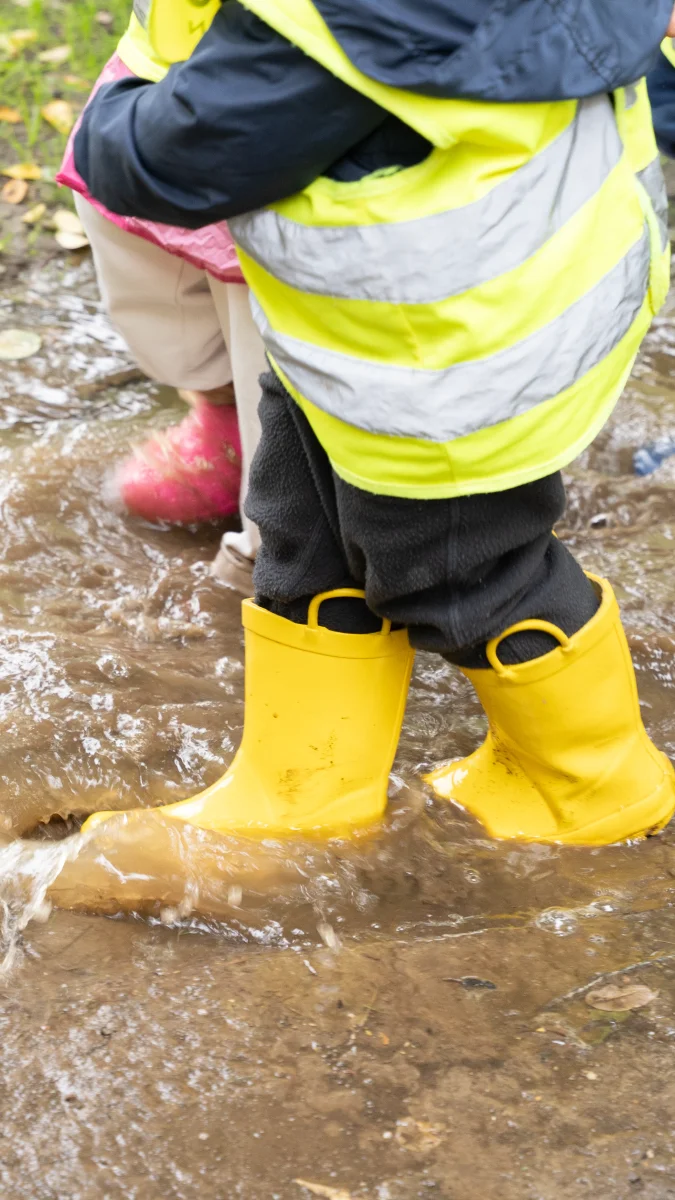
For us, it is a core value: children need to spend time outdoors. It makes them feel good, they learn a lot, and they’re entitled to it.
The school garden, the neighbourhood, Monza Park and the many opportunities offered by the local area become open-air classrooms.
Outdoors, children encounter the world in all its complexity. They discover places, people and activities. They develop a sense of belonging and civic skills.
Our outdoor space is an integral part of the school: the children spend time there every day, throughout the year.
Here, they find fulfillment of the fundamental need for spontaneous play, the most valuable experience for healthy development.
The benefits of outdoor play
- Physical and emotional wellbeing Exercise, natural light and fresh air, contact with nature
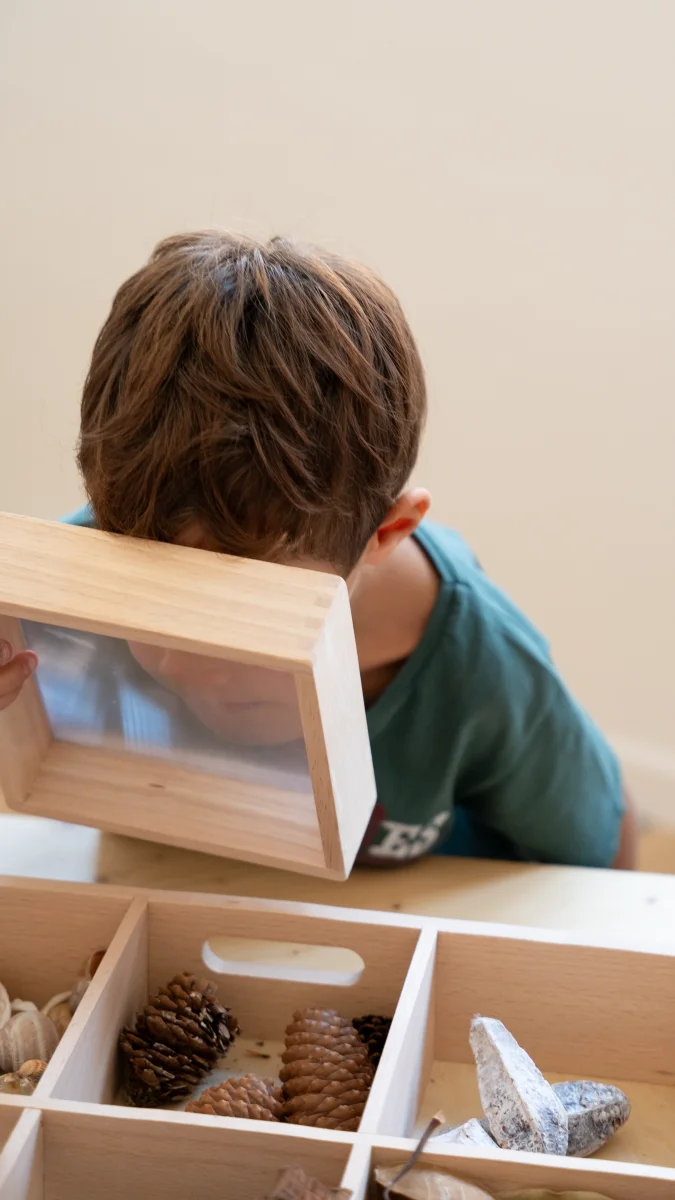
- Curiosity and observation Developing a scientific eye
- Collaboration and autonomy Working together in real-life situations
- Multisensory experiences Touching, listening, smelling, looking, coordinating body and mind
- Environmental awareness Knowing, understanding and respecting the ecosystem
- Risk assessment Anticipating the consequences of one’s actions, recognising one’s physical limits, and exercising self-control
A sustainable school
We promote respect for the environment and all living things. We use recycled and reused materials.
No plastic furniture or toys: just wood and natural materials.
The Atelier: a space for creative thinking
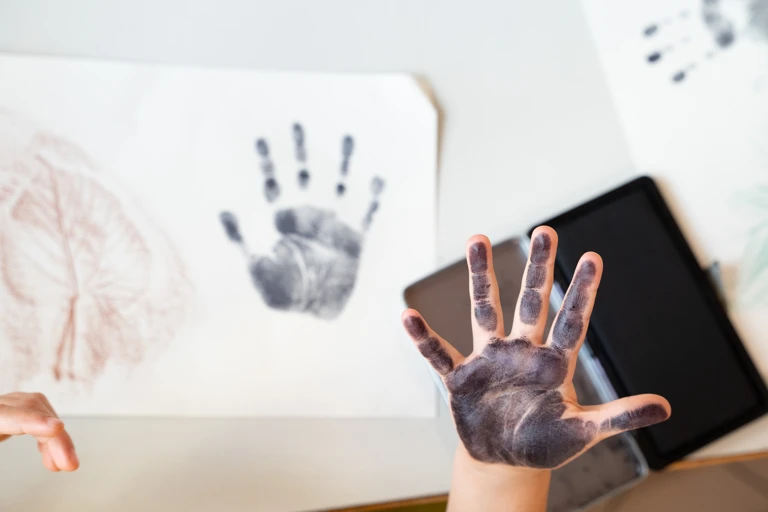
The studio is where divergent thinking takes shape.
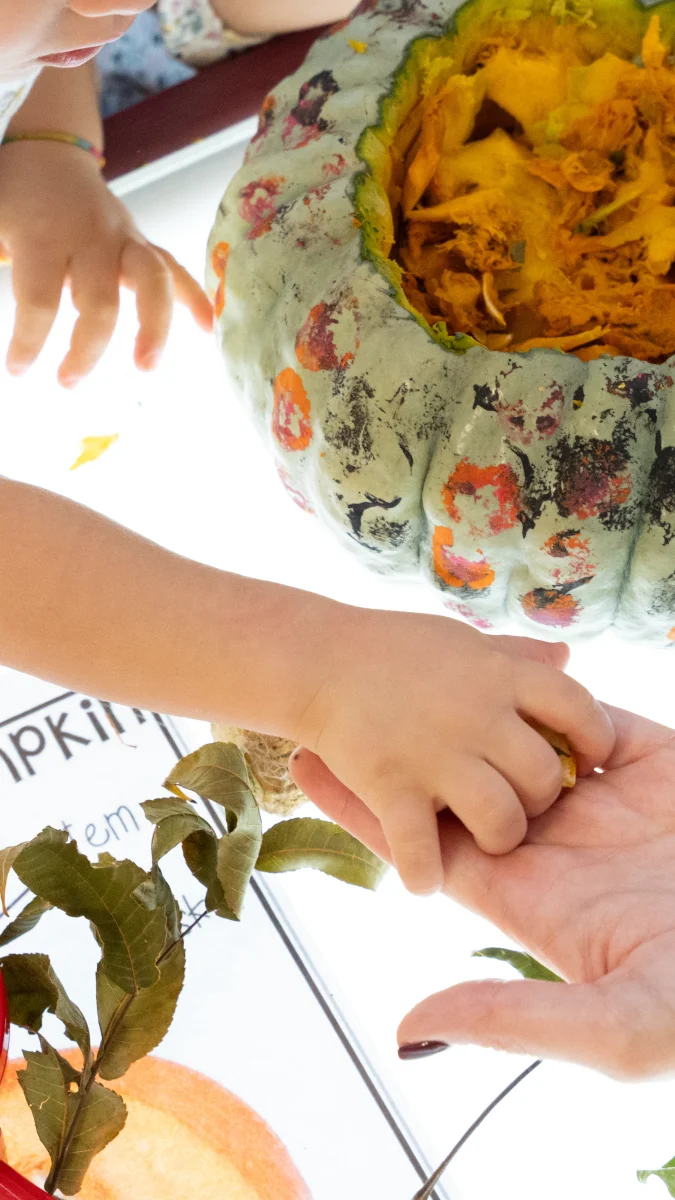
The children have constant access to art supplies, paints and modelling clay.
Through various forms of expression, they develop their creativity, fine motor skills and ability to express themselves.
Every project starts with a question or an interest expressed by the children.
We draw inspiration from Loris Malaguzzi’s Theory of the Hundred Languages. We use the languages of art to support children’s learning when exploring complex questions about the physical and natural world.
By learning to master artistic techniques, children explore knowledge in depth and find original answers to their questions.
An example: snails in the garden
Children are fascinated by snails. Here’s how we turn that fascination into learning:
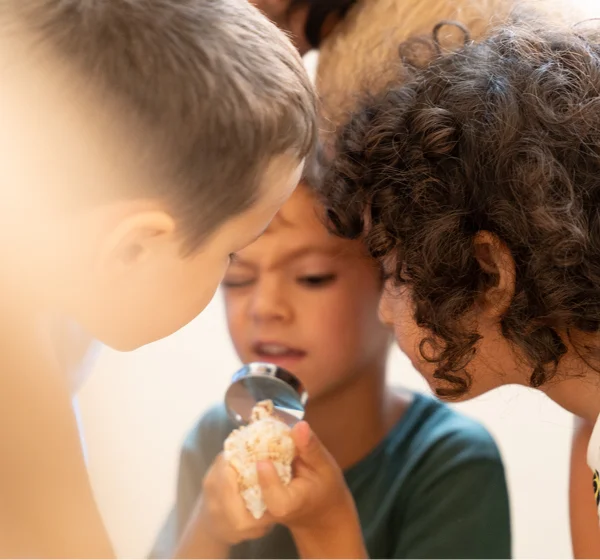
We take photos and print them.
Let’s observe their movements and think about how they move.
We’re setting up a corner in the studio with books about snails.
Let’s read picture books featuring snails.
We draw from life, trying to reproduce the subject faithfully.
Let’s make spiral patterns in the clay.
Observation gives rise to new questions, which we call lines of inquiry: why does a snail have a spiral shell? What other things have that shape?
Things are getting "complicated" and new challenges are emerging. Meanwhile, the walls of the section are being decorated with graphics, spirals and photos taken by the children.
The teaching team
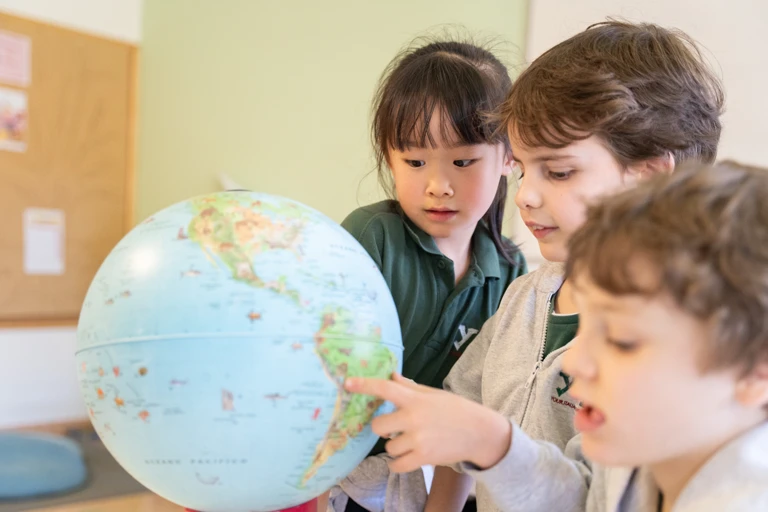
Class teachers who are native Italian speakers, supported by English teachers who speak exclusively in English.
The team’s work is coordinated by an educational coordinator and an educationalist.
Our educators are passionate and highly trained professionals who undergo continuous professional development through the Becoming Academy and hold a certificate in paediatric first aid.
Organisation
The day
At the Preschool, every day is designed to give children the freedom to take the initiative, within a well-cared-for environment brimming with possibilities.
The sections are organised so that children can navigate spaces and materials independently, becoming active participants in the development of their own knowledge, whilst managing relationships and sharing.
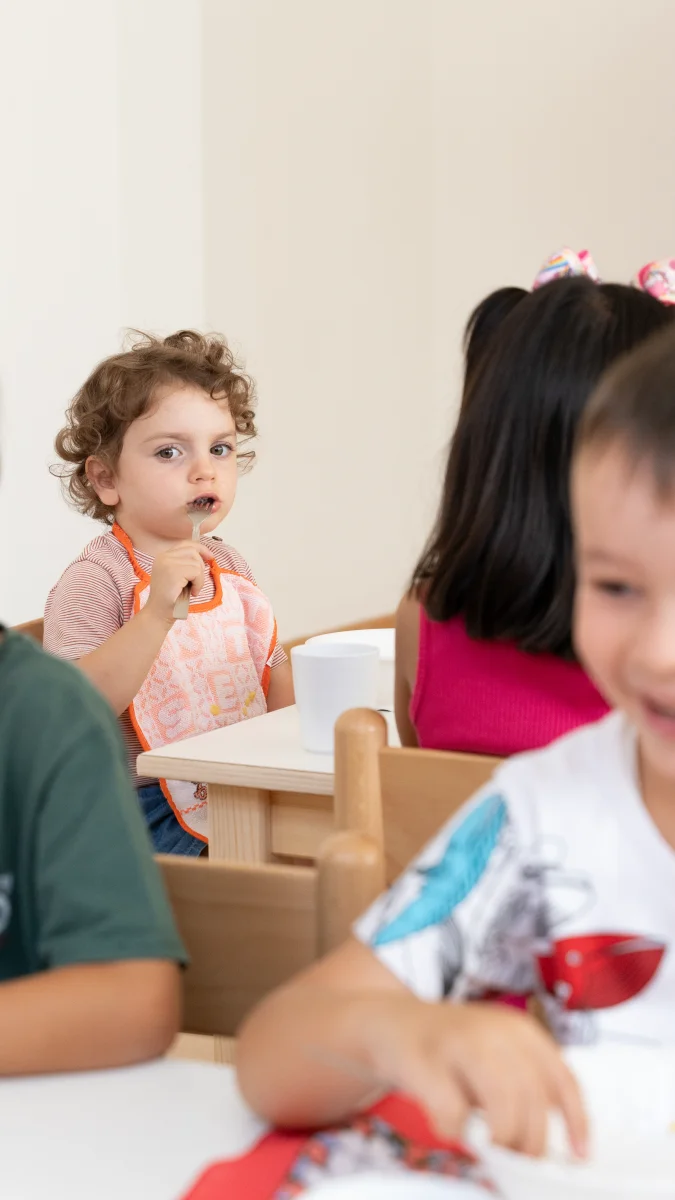
Even mealtimes, personal hygiene and rest periods become valuable opportunities for mutual care: the children learn to look after themselves and to cooperate and support one another, step by step towards greater independence.
| Service | Opening hours |
|---|---|
| Pre-school | from 08:00 am |
| School timetable | 09:00 – 13:00 – Part Time 09:00 – 16:30 – Full Time |
| After-school | until alle 6:00 pm |
Settling in
The nursery school welcomes children who have already developed strong social and emotional skills over the previous years.
They know how to spot interesting things, have learnt that other children are great playmates, and cope well with saying goodbye to their parents.
They therefore have the resources to experience school independently from day one.
We have therefore decided to allow children to attend from the very first day; parents are invited to take part in the preparatory activities for the start of the school year by spending part of the morning of the first day in the classroom.
The school-family partnership is built on mutual trust and a willingness to listen to the child’s needs. Where necessary, the timetable is adjusted to suit each child’s actual settling-in process.
This is how every parent’s involvement in our educational community begins: school and family, partners in a child’s development.
The day
At the Preschool, every day is designed to give children the freedom to take the initiative, within a well-cared-for environment brimming with possibilities.
The sections are organised so that children can navigate spaces and materials independently, becoming active participants in the development of their own knowledge, whilst managing relationships and sharing.
Even mealtimes, personal hygiene and rest periods become valuable opportunities for mutual care: the children learn to look after themselves and to cooperate and support one another, step by step towards greater independence.
The morning meeting
The day begins with a meeting, a time when the group has its say, and sets the tone for the rest of the day.
We take the register, count those present, organise the morning, and split into small groups for the workshops and games.
The assembly is the moment when the ‘I’ meets the ‘We’: the children understand what it means to grow up together.
Everyone feels that they matter to others. We share the rules for getting on well together, we make commitments, we listen to questions and try to answer them together.
Throughout the day
The middle of the morning is set aside for exploration and research projects.
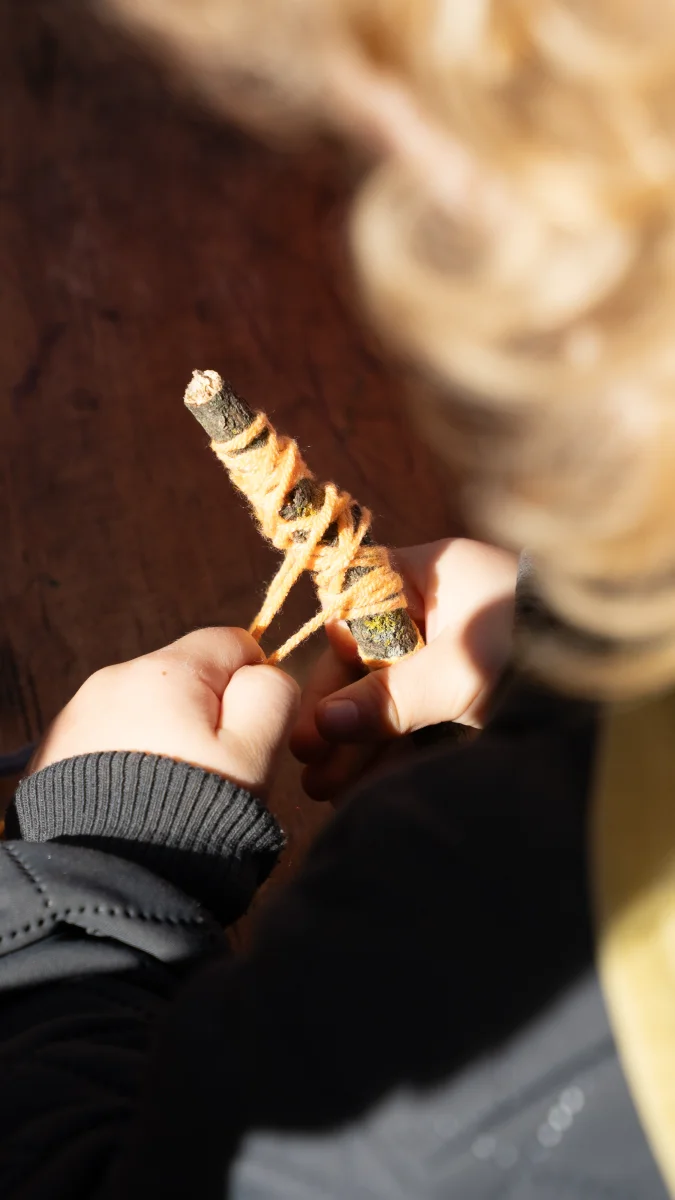
The children build, paint, mold clay and carry out experiments that combine science, art and nature. They listen, invent and draw stories.
Teachers observe, guide, and help children to formulate questions and keep looking for answers. They support the social dynamics and the recognition of emotions that emerge during play.
They create settings using new materials, engage children in small groups using special tools, and produce documentation together with the children.
Nursery school is like a huge workshop for experiential learning.
Through a variety of materials, languages and situations, children build up their network of knowledge. They learn to observe, ask questions, seek solutions, experiment, overcome mistakes and feel confident in every area.
Day by day, they develop self-regulation and self-awareness.
Rest
We offer children the opportunity to have a nap after lunch: this rest period is in line with their natural rhythms.
Those who don’t sleep find themselves enjoying moments of relaxation, to replenish the energy expended during the morning.
Lunch: quality and seasonal produce
In line with our commitment to sustainability, we offer balanced menus that feature a wide variety of seasonal produce. The menus are designed in collaboration with nutritionists specialising in early childhood and approved by the ATS, in accordance with the Region’s guidelines.
- High standards of quality and food safety
- Seasonal menus, updated every year
- Pay close attention to food intolerances
Lunch is a valuable learning opportunity for putting the rules of living together into practice and for developing independence and responsibility:
- set and clear the table
- adjust the tone of your voice
- recognising foods
- understanding seasonality
- to reflect on waste management
The day
At the Preschool, every day is designed to give children the freedom to take the initiative, within a well-cared-for environment brimming with possibilities.
The sections are organised so that children can navigate spaces and materials independently, becoming active participants in the development of their own knowledge, whilst managing relationships and sharing.
Even mealtimes, personal hygiene and rest periods become valuable opportunities for mutual care: the children learn to look after themselves and to cooperate and support one another, step by step towards greater independence.
| Service | Opening hours |
|---|---|
| Pre-school | from 08:00 am |
| School timetable | 09:00 – 13:00 – Part Time 09:00 – 16:30 – Full Time |
| After-school | until alle 6:00 pm |
Settling in
The nursery school welcomes children who have already developed strong social and emotional skills over the previous years.
They know how to spot interesting things, have learnt that other children are great playmates, and cope well with saying goodbye to their parents.
They therefore have the resources to experience school independently from day one.
We have therefore decided to allow children to attend from the very first day; parents are invited to take part in the preparatory activities for the start of the school year by spending part of the morning of the first day in the classroom.
The school-family partnership is built on mutual trust and a willingness to listen to the child’s needs. Where necessary, the timetable is adjusted to suit each child’s actual settling-in process.
This is how every parent’s involvement in our educational community begins: school and family, partners in a child’s development.
The day
At the Preschool, every day is designed to give children the freedom to take the initiative, within a well-cared-for environment brimming with possibilities.
The sections are organised so that children can navigate spaces and materials independently, becoming active participants in the development of their own knowledge, whilst managing relationships and sharing.
Even mealtimes, personal hygiene and rest periods become valuable opportunities for mutual care: the children learn to look after themselves and to cooperate and support one another, step by step towards greater independence.
The morning meeting
The day begins with a meeting, a time when the group has its say, and sets the tone for the rest of the day.
We take the register, count those present, organise the morning, and split into small groups for the workshops and games.
The assembly is the moment when the ‘I’ meets the ‘We’: the children understand what it means to grow up together.
Everyone feels that they matter to others. We share the rules for getting on well together, we make commitments, we listen to questions and try to answer them together.
Throughout the day
The middle of the morning is set aside for exploration and research projects.
The children build, paint, mold clay and carry out experiments that combine science, art and nature. They listen, invent and draw stories.
Teachers observe, guide, and help children to formulate questions and keep looking for answers. They support the social dynamics and the recognition of emotions that emerge during play.
They create settings using new materials, engage children in small groups using special tools, and produce documentation together with the children.
Nursery school is like a huge workshop for experiential learning.
Through a variety of materials, languages and situations, children build up their network of knowledge. They learn to observe, ask questions, seek solutions, experiment, overcome mistakes and feel confident in every area.
Day by day, they develop self-regulation and self-awareness.
Rest
We offer children the opportunity to have a nap after lunch: this rest period is in line with their natural rhythms.
Those who don’t sleep find themselves enjoying moments of relaxation, to replenish the energy expended during the morning.
Lunch: quality and seasonal produce
In line with our commitment to sustainability, we offer balanced menus that feature a wide variety of seasonal produce. The menus are designed in collaboration with nutritionists specialising in early childhood and approved by the ATS, in accordance with the Region’s guidelines.
- High standards of quality and food safety
- Seasonal menus, updated every year
- Pay close attention to food intolerances
Lunch is a valuable learning opportunity for putting the rules of living together into practice and for developing independence and responsibility:
- set and clear the table
- adjust the tone of your voice
- recognising foods
- understanding seasonality
- to reflect on waste management
The educational community
In the Becoming Education model, children, parents and teachers are part of the same educational community, connected to the local area and in harmony with the environment.
Let’s build a community where parents feel welcome and involved.
The educational partnership is based on trust, dialogue and collaboration.

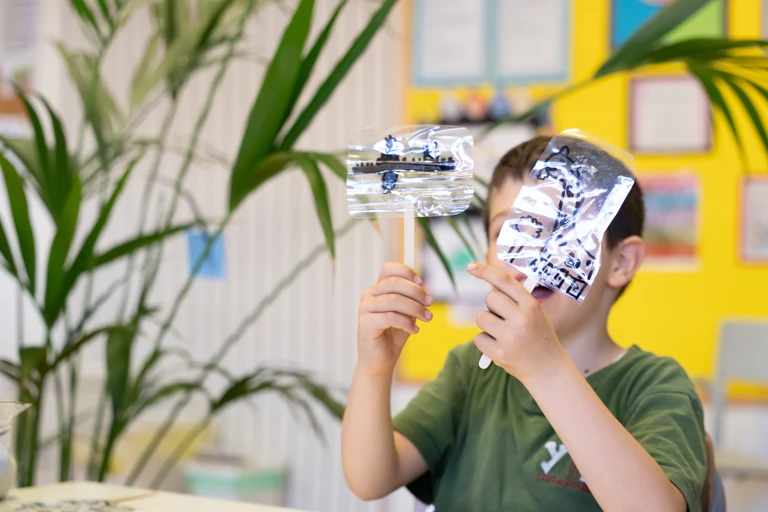
YIES’ JOURNEY CONTINUES WITH THE PRIMARY SCHOOL
La continuità educativa di YIES prosegue con la Scuola Primaria paritaria bilingue con certificazione IB e la Secondaria di I° grado paritaria bilingue.
Frequently asked questions
What is the educational approach of YIES Preschool? YIES draws inspiration from the Reggio Emilia Approach, which is recognized worldwide for its focus on children’s “hundred languages” of expression.
The model is socio-constructivist: children are considered active protagonists and co-constructors of their own knowledge through inquiry, exploration, and research.
- Pre-school: from 08:00 AM.
- School timetable: 09:00 AM – 01:00 PM (Part Time) or 09:00 AM – 04:30 PM (Full Time).
- Post-school: until 06:00 PM.
Start your journey at Yies
Come discover YIES: book a visit or request information. We look forward to seeing you!